Termite calls in Hyattsville cluster in early spring. On the first warm, humid afternoons in late March through May, swarmers push out of foundation cracks and basement window frames, then die in piles of translucent…
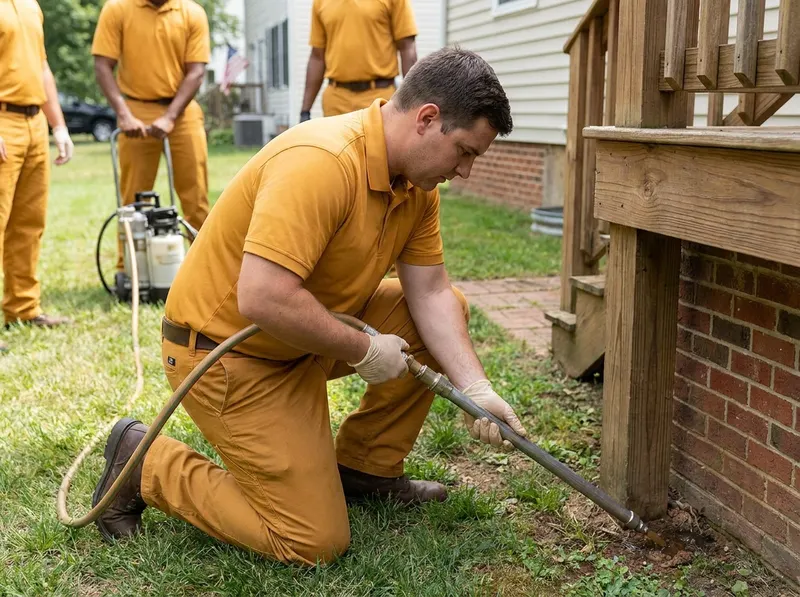
Termite calls in Hyattsville cluster in early spring. On the first warm, humid afternoons in late March through May, swarmers push out of foundation cracks and basement window frames, then die in piles of translucent wings on sills and in spider webs. Homeowners in Historic Hyattsville and Kirkwood usually find the wings before they find the termites, because the colony itself stays hidden in soil and inside wood. The older brick-foundation houses along the Historic Hyattsville blocks, the split-levels in University Hills, and the porch-fronted homes in Castle Manor and Queens Chapel Manor all share the same weak points: a below-grade basement wall, a wooden porch post set into concrete, and mulch stacked above the brick line where soil contact gives termites a covered path indoors.
Moisture is the deciding factor. Lots that drain toward the Northwest Branch — the low ground near Driskell Park and along the Northwest Branch Trail corridor, plus parts of West Hyattsville and Riverdale Heights on the Hyattsville side — hold damp soil against foundations for weeks after a heavy rain. Damp soil keeps subterranean termite tubes intact and lets a colony work a joist end year-round. During inspection we probe sill plates, check crawlspace piers, look behind basement paneling, and follow any mud tube back to the soil, because a tube tells you the direction of travel and where the barrier has to go.
Decision-fit is straightforward. Choose a full perimeter soil treatment when activity appears in more than one location, when the house has never been treated, or when you need a durable barrier for a sale or refinance. Choose a spot treatment when one isolated area — a single porch post, one section of garage sill, a bath trap — shows activity and the rest of the structure inspects clean. Spot treatment costs far less and takes an hour or two, but it protects only what it covers; termites can re-enter three feet away, which is why we document the treated area on a diagram instead of implying whole-house coverage. Bait station systems suit slab-on-grade and Arts District Hyattsville townhome situations where drilling finished floors is undesirable, or where a landlord wants ongoing monitoring; they work by colony elimination over months rather than an immediate barrier, so they are a monitoring strategy, not an emergency fix.
Landlords and small property managers in Lewisdale and Hyattsville Hills get the paperwork side handled too. We provide the written inspection findings and treatment record you can hand a tenant, a buyer's agent, or a lender, and we coordinate access windows so basement apartments and occupied units are entered once, not three times. Termite work in Maryland is regulated by the Maryland Department of Agriculture, and you should ask any company — including us — for current credentials before applying soil termiticide at your property. Prep on your side is short: clear a two-foot path along interior basement walls, move stored boxes off the floor where possible, and unlock crawlspace hatches. After treatment, keep mulch and soil at least six inches below siding and brick veneer, extend downspouts away from the foundation, and expect swarmers you already have inside to keep appearing for a week or two as the barrier does its work.
Every job gets a firm, written price after a free on-site visit.
Tell us about your termite treatment job in Hyattsville and we'll send a clear, written quote — usually the same day.
 Veyronix Pest Control Service